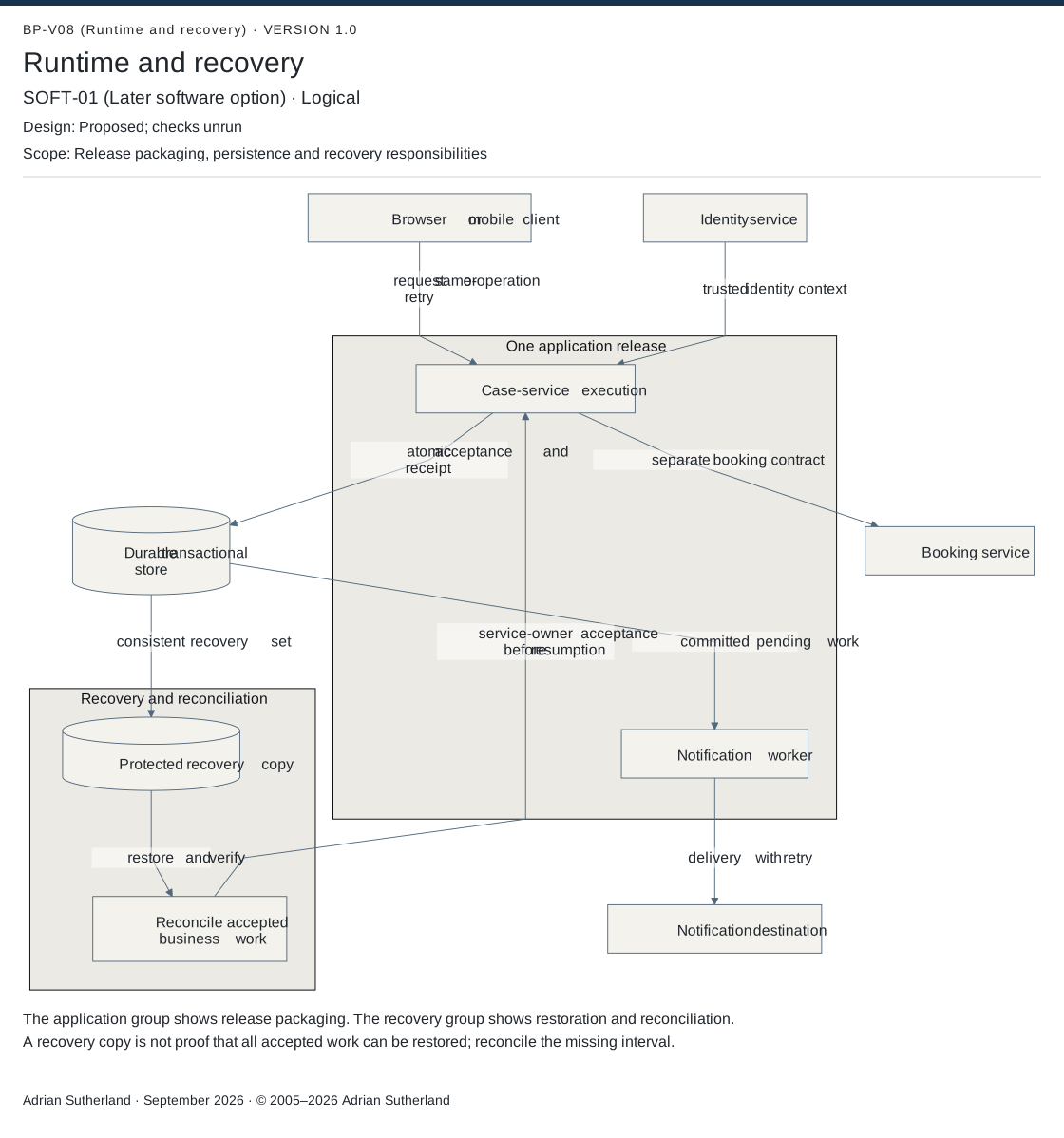
Runtime arrangement
TD-D1 (Runtime arrangement) evaluates one application release and a durable transactional store for SOFT-01 (Later software option). The notification relay can run as a worker from that release. Scheduling, suppliers, products and instance count remain open. Only the case service accepts ownership changes; summary work receives narrower access.
Keep deployment permissions separate from normal service permissions. Identify support for the application, store, identity, network and supplier dependencies. Measure realistic concurrent acceptance, reconnecting clients and pending notifications before selecting capacity and cost limits.
Restart and restore
| Event | Required treatment |
|---|---|
| Application restart after acceptance | Preserve case, receipt and pending notification together. An authorised identical repeat returns the result without another transfer. |
| Restore a copy from before acceptance | Accepted work may be missing even if the restore succeeds. Pause affected actions and notifications, prevent old writers, establish the missing interval and reconcile with the people doing the work. |
| Resume after reconciliation | The service owner accepts the reconciled position and the remaining risks before writes resume. |
TD-R1 (Recovery procedure) and SO-I1 (Incident and restoration) connect the technical recovery procedure to the business incident. An older receipt is historical; the current owner must be checked separately. Recovery time, allowable loss, copy location, encryption, retention and restoration checks remain open.
Release and service acceptance
TD-C1 (Release and compatibility) records the package, configuration, schema and client compatibility. Reverting an application does not undo accepted transfers. Choose rollback, forward repair or paused reconciliation according to the actual failure.
SO-R1 (Readiness record) gathers migration, access, staffing, observation, supplier and recovery readiness. SO-A1 (Service acceptance) records the service owner’s acceptance decision, including funding and residual risks. Begin with agreed limited exposure and stop widening when checks fail. Thresholds and decision owners need agreement.
TD-V1 (Environment checks) checks restart, concurrent callers, repeated notification, identity failure, older restoration, incompatible schema and representative load. All results remain unrun.
Physical choices
| Choice | Information needed before implementation |
|---|---|
| People and procedures | Named owners, cover, escalation contacts, training and effective working instructions |
| Runtime and location | Selected hosting, language, runtime version, deployment units, instance counts and network paths |
| Persistence | Store product and configuration demonstrating atomic acceptance and restart durability |
| Access | Identities, policies, credentials, rotation and emergency-access arrangements |
| Release | Tested package, configuration, data migration, client compatibility and recovery route |
| Recovery | Measured restore procedure, protected copies, accepted loss and business reconciliation |
These are open Physical decisions, rather than an as-built specification. The technology and operations records provide the source detail.