Reading the sequence
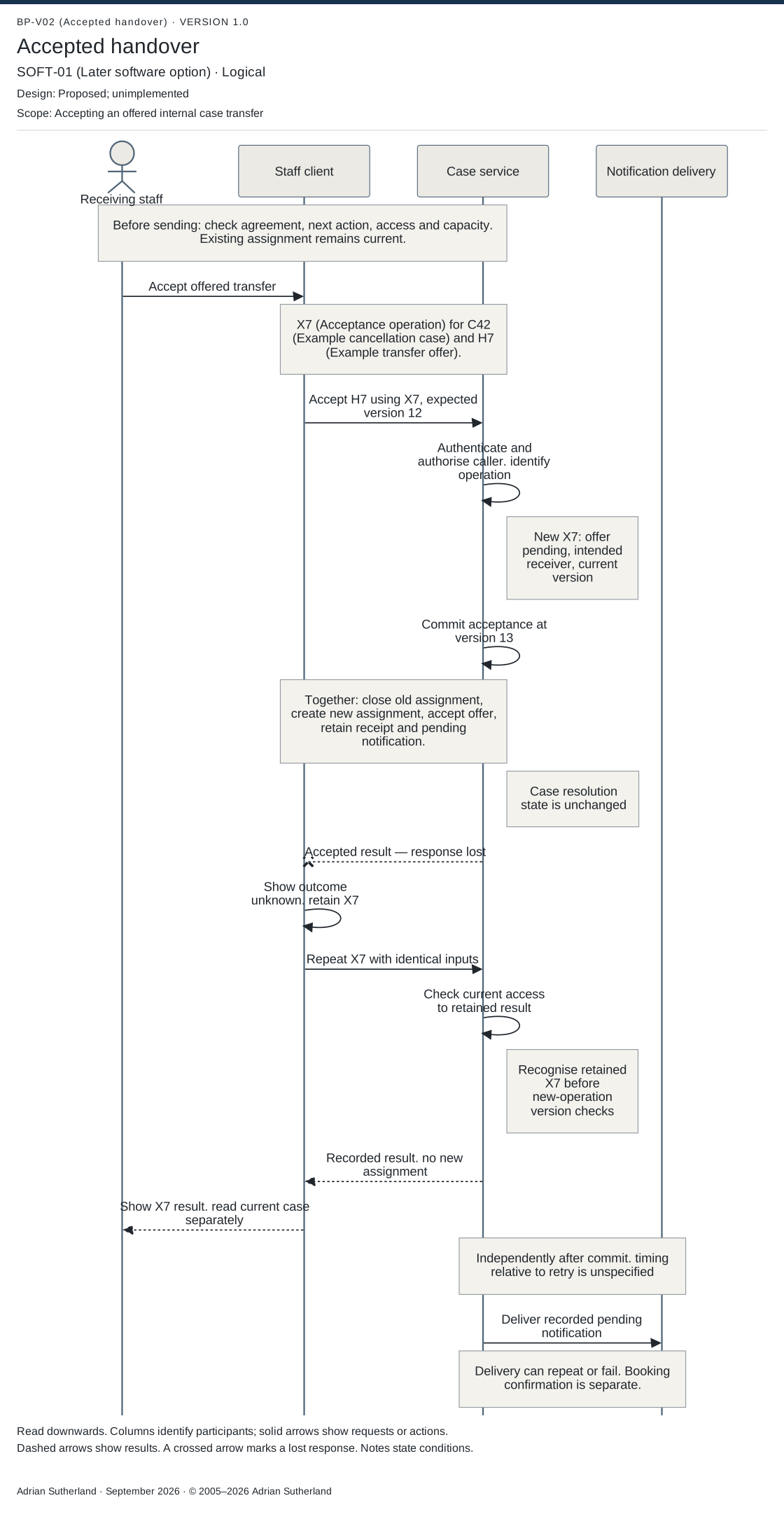
The receiving person has checked the learner’s agreement, next action, access and capacity. Their staff application (the client) sends a request identified as X7 (Acceptance operation) for case C42 (Example cancellation case), offer H7 (Example transfer offer) and expected version 12. X7 identifies this operation for this caller and operation type. The case service authenticates the caller and checks their authority.
For a new operation it checks the pending offer, intended receiver and current case version. One atomic change closes the old assignment, records the new one, marks the offer accepted and retains the result as an acceptance receipt and records a pending notification. All changes take effect together, or none do. The accepted version is 13. The case’s resolution state stays unchanged.
When the reply is lost
The client retains X7 and shows an unknown outcome. A repeat with the same identity and inputs returns the stored result within the agreed retention period. The service checks current access and recognises that existing operation before applying the version checks for a new operation.
Notification follows the commit independently. The drawing places it below the retry for readability; it could occur earlier. Delivery can repeat or fail. Booking confirmation remains a separate responsibility.
Other outcomes
| Situation | Required treatment in SI-C01 (Transfer acceptance contract) |
|---|---|
| Caller has lost access | Refuse access to the retained result, including through a retry. |
| X7 has different inputs | Reject conflicting reuse; preserve the original result. |
| A new operation uses stale version 12 | Reject the new request because version 12 is stale. Read the current case before proposing another acceptance. Two new requests based on version 12 cannot both apply. |
| Receipt is missing or expired | Keep the outcome unknown and reconcile the history. Do not silently create a new operation identity. |
| An old receipt follows a later transfer | Show its historical result separately from the current owner. |
| Client is offline | Keep the proposed action pending until the service accepts it. |
The diagram selects one path through SI-C01. The contract and these exception rules complete its meaning. Storage, transport, retention periods, retry limits and support response targets remain open. SI-V1 (Interface checks)’s implementation checks are unrun.
Methodology configuration
This view could sit within an interface specification or a service design. Keep the business requirement, interaction contract and checks linked when mapping it into your records. See Methodology configuration.
Return to the service overview or inspect the blueprint records.